
An Alchemical Informed Philosophy for Reading Tarot
Thoughts on engaging the flow of truth and (mis)understanding with the Tarot.

“Truth does not make sense!”
- from The Passion According to G.H. by Clarice Lispector p.11
“The Truth? The Truth! There is nothing more flimsy than the Truth!”
- Phillip Saurbeck
“And I have found both freedom and safety in my madness; the freedom of loneliness and the safety from being understood, for those who understand us enslave something in us.”
- from The Madman by Khalil Gibran
“The ties that bind become the ties that restrict.”
- mad atta
There is a deep cry in many humans to have a sense of clarity and understanding. We want to know the right way to do things, the correct answers and the certainty of being secure in our understanding. In order to fulfill our lust for such security we are often willing to sacrifice to the point of putting ourselves in a survivalist mindset. We forfeit on other ways of seeing and end up demonizing those who are different in their perspective. Threats to the disruption of our view of reality must be suppressed and banished. We want the truth and nothing but the stagnant truth. We want permanence. We believe our own bullshit to the point that we get sick. Harm to others and ourselves becomes par for the course as the price of being right.
Fortunately there is a tool that is here to help us with such toxic ways of perceiving reality. That tool is Tarot. Unfortunately many approach Tarot with the same vile perspective that they approach the rest of life with. They want to do it the right way, have the correct interpretations and the certainty of knowing what Tarot is saying about their future. Utilizing Tarot in this way is a complete forfeiture on the opportunity it provides for us.
You do not need this or any other philosophy to imaginatively read Tarot. In fact a philosophy is guaranteed to lead you down a path of limitation. While limitation is essential for understanding. It is just as essential to acknowledge that understanding becomes a closed casket if one does not relent on holding it.
Tarot is a tool to help us release from our understanding. Tarot is about the imagination and seeing ourselves & the world around us in a way our minds so feverishly resist for the sake of normal predictability. Tarot is about engaging with the absurd. To stretch our perception to see the opportunities that are hidden in plain sight. To loosen the restrictions that are causing such harmful contortions. To dance with the whimsical. To enjoy the pleasures of madness and discover the hidden value of misunderstanding. To let the truth of the moment be revealed and relieved through the flow of impermanence.
When I first got into Tarot I really wanted to write a guidebook. Why? Well I wanted to share my philosophy and love of Tarot.
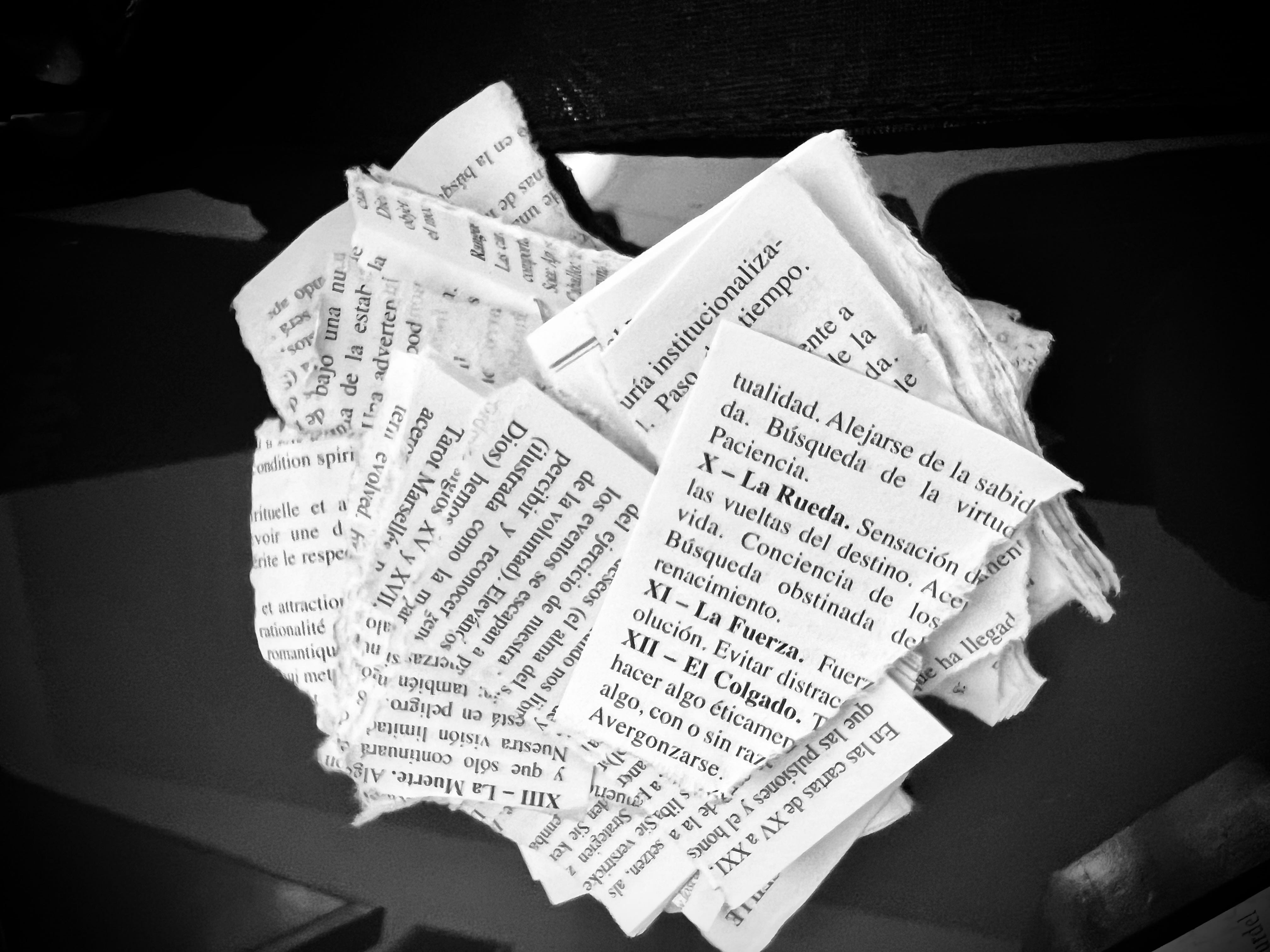
Then I took a Tarology course taught by twitchy witch. Right out the gate she had us tear up the guide book to our deck. Both myself and the rest of the class were stunned and a bit horrified & terrified! This can’t be! How will we know what to say, how to interpret and what does this all mean?!? This act of destroying the guide book she lead us in was an incredibly liberating gift. twitchy witch was calling us to be present with ourselves, the cards and the person we were reading Tarot with. She exposed us all as Fools! And we were beginning our journey, the Fools journey.
And yet this exercise left me with a dilemma. I had been working on writing a Tarot guide book and now faced the problematic reality with such an attempt. Why create a book that will most likely result in the limitation of imagination when the great gift of Tarot is the flourishing of imagination?
I hold this in paradox with the experience that having a general understanding of Tarot is actually quite useful in learning to liberate one’s imagination. Although to be fair this basic understanding best comes not from reading about it, but actually playing with the deck.
How does one guide another on journey that honors the process and beauty of experiencing one’s innocence and ignorance? How does one provide a philosophical structure that is not intended to portray permanence or static understanding?
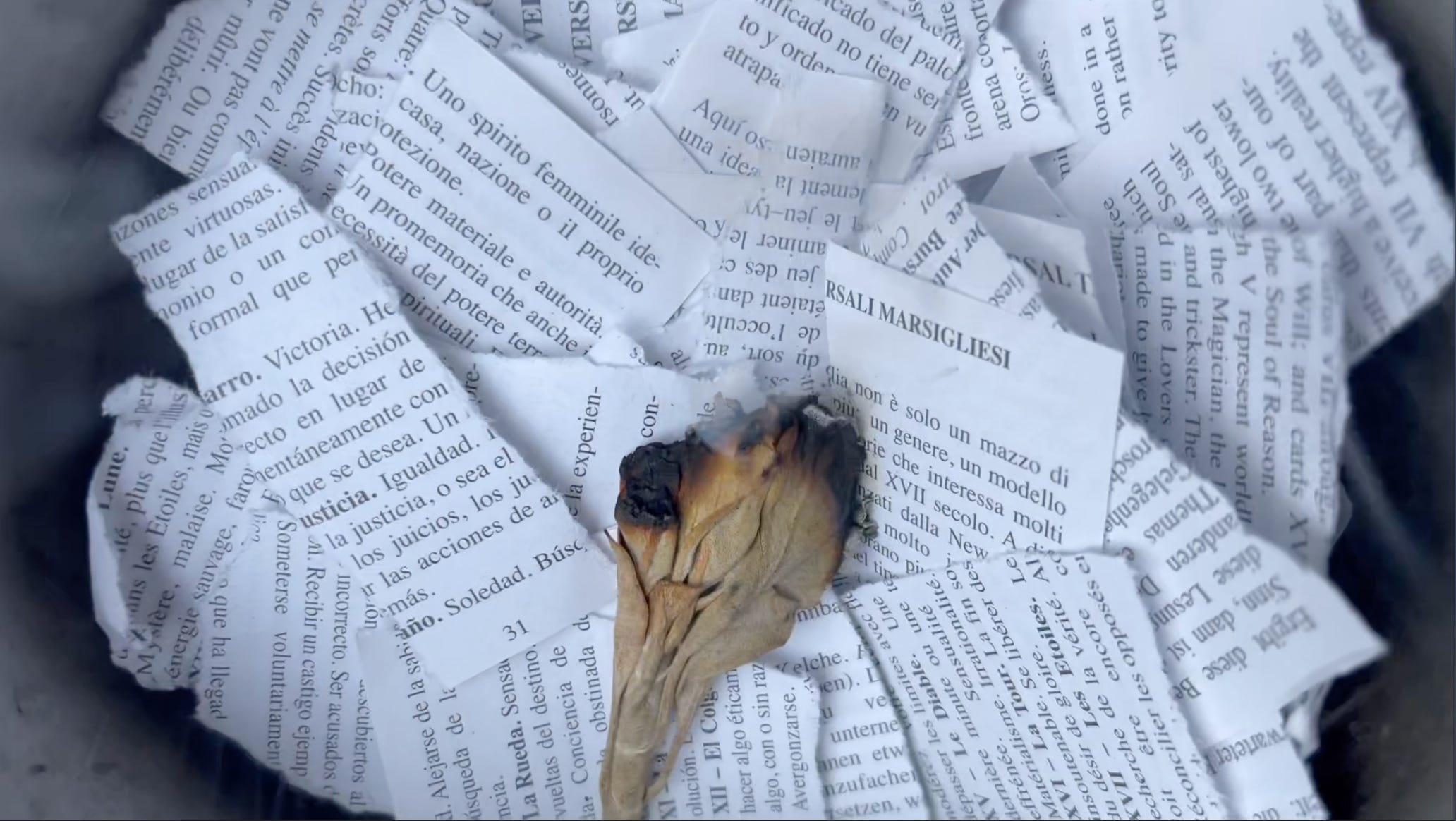
So here I am with the paradoxical task of writing an alchemical informed philosophy for reading Tarot that ultimately needs to be released and recycled.
I will make an attempt.
1. Ditch the Guide Book. Just Spend Time with the Deck, Any Deck.
How much time? At least a week. No a month. Wait make that a year! At minimum spend as much time as you can with the deck until you start to notice details that you did not notice before. I invite you to write your impressions. Got a friend handy? Do a reading with them and just make it up as you go? Be the fool you are.
This period of learning Tarot is essential because you will say things that make absolutely no sense and in doing so you may just create an encounter with the truth. What truth? The truth of you. The truth of your situation. The truth of the one you are with. The truth that makes no sense and yet somehow hits on a level you did not anticipate. The truth of the moment.
2. Be Playful. The More Imagination the Better.
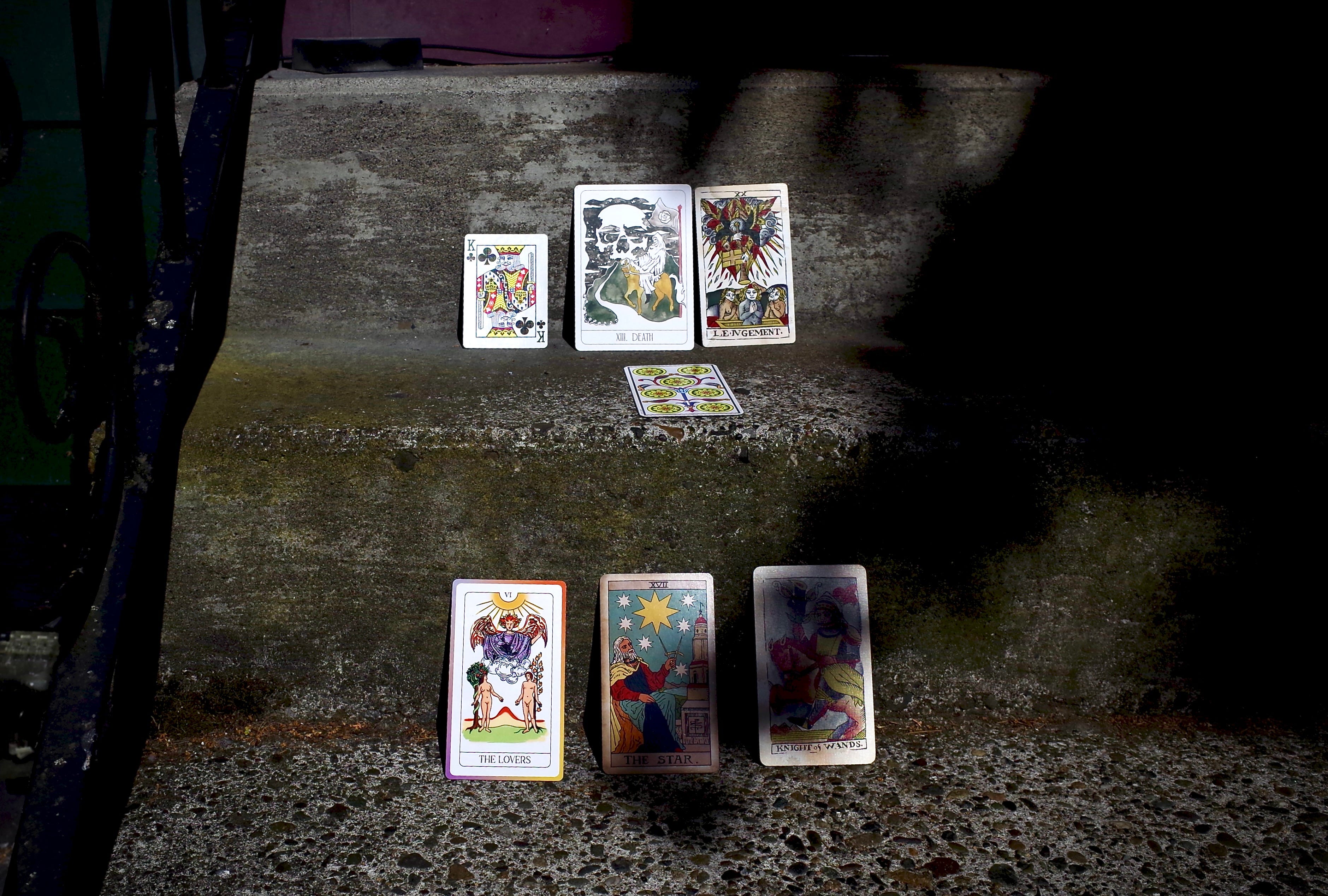
There are no rules. This is all made up! Be bold. Be present. Speak the absurd. Notice the subtly of the images on the card. Feel the textures as you move them together. Put them in numerical order and observe the development of a process. Shuffle them and discover that when seen in random order a new narrative and process can be named. Be open to the unexpected. The truth of the moment will reveal itself. Most importantly, have fun!
3. Let Go of the Deck because Tarot is Everywhere.
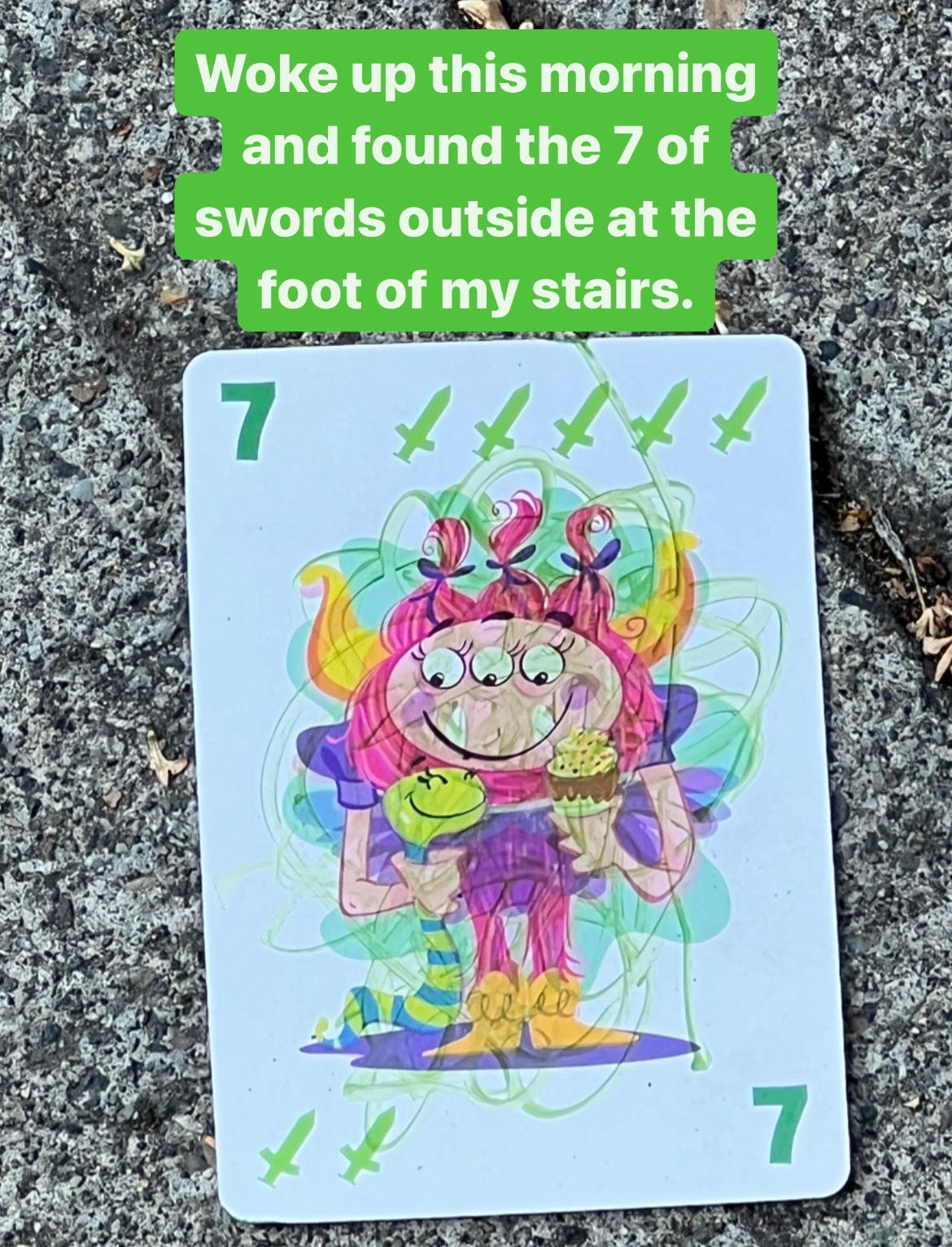
Letting go of the deck is a practice in acknowledging Tarot cards are not sacred. It is a tool that can help you realize Tarot exists beyond the deck in the world around you. As you play with your deck lose the cards intentionally and unintentionally. Let them get bent, marked, stained and written on. In order to learn to use it you must be willing to playfully lose it.
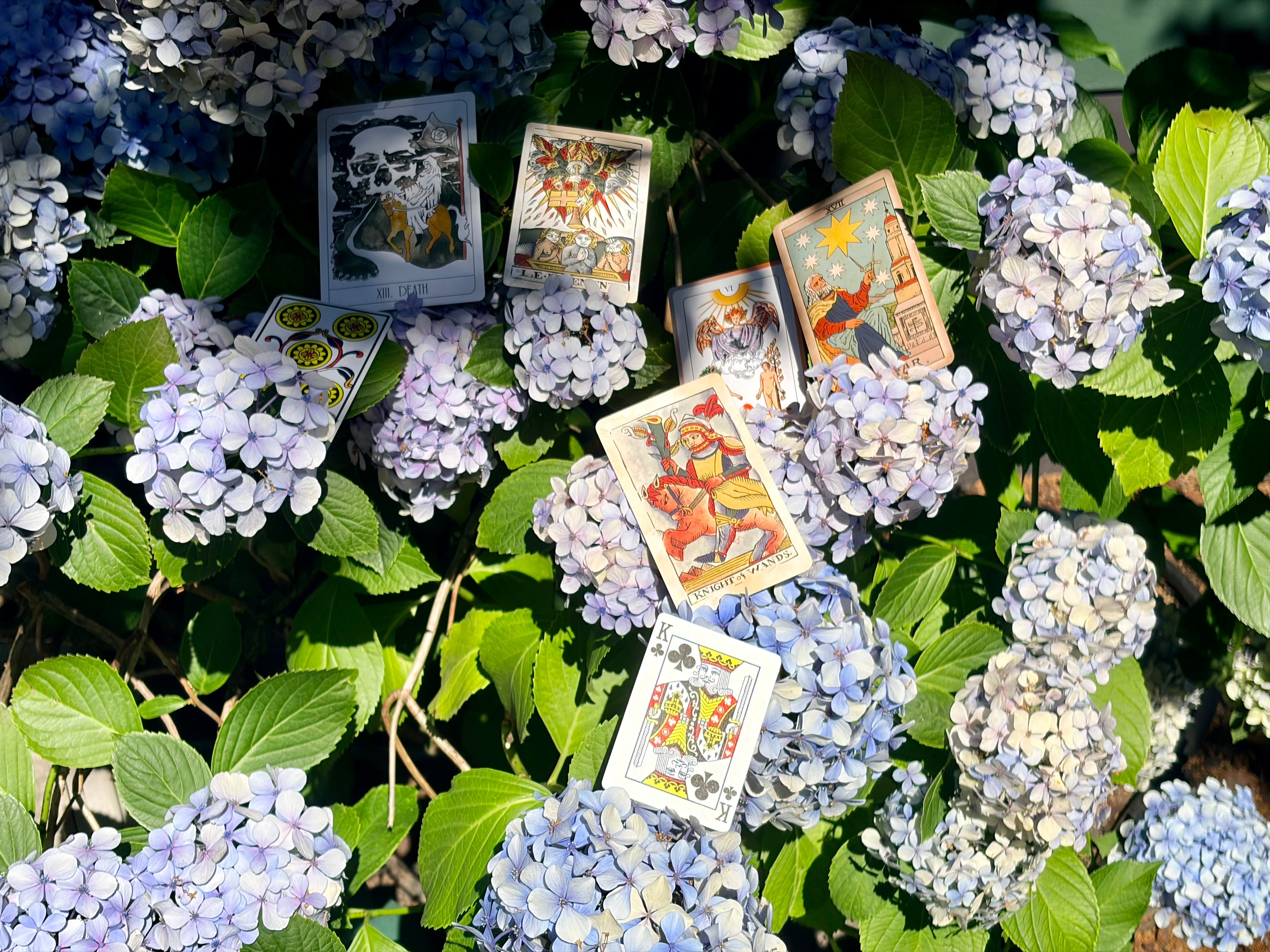
Tarot is everywhere because Tarot is a way of being, seeing and imagining reality. Ultimately, Tarot is about being present and noticing. Noticing yourself, noticing the imagery on the card, noticing the other and noticing the environment. So yeah, not even the deck is necessary for reading Tarot.
In closing I want to mention that I have updated the subscriber benefits for this substack. Here are the three tiers and their benefits:
Free Subscribers:
Essays, notes and podcasts. Plus occasional subscriber group chats.
Paid Subscribers:
The knowledge of being a contributor in the holding of the holy unholy perception.
One 1 card Tarot pull and message per month via email.
True Believers:
The knowledge of being a sustainer in the holding of the holy unholy perception.
One 3 card Tarot reading per month via 25 minute video chat.